
VIETNAM HIGH SPEED RAIL PROJECT
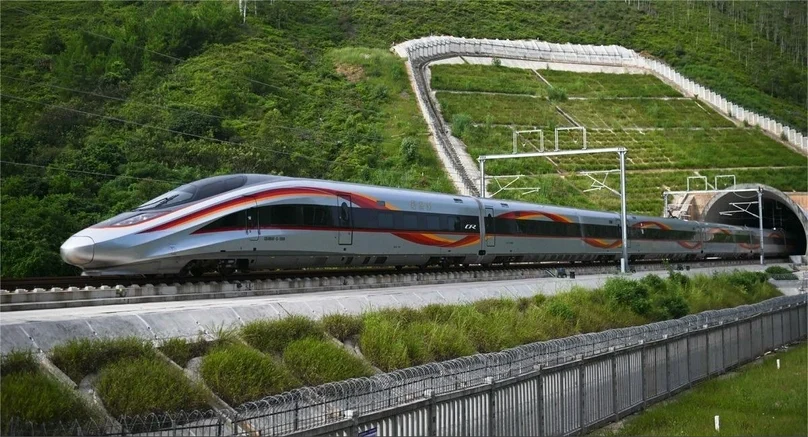
Vietnam High Speed Rail Project. With the completion of a fundamental legal framework, Vietnam's main national railway projects have kicked out the new year of 2026 with an expedited implementation phase, particularly the North-South high-speed railway and the Lao Cai-Hanoi-Hai Phong railway line.
Vietnam High Speed Rail Project Information:
Hanoi (VNA) - With the completion of a fundamental legal framework in 2026, Vietnam's important national railway projects, namely the North-South high-speed railway and the Lao Cai-Hanoi-Hai Phong railway line, are entering an expedited implementation phase.
Legal Framework Finalized:
After the National Assembly approved the investment policy for these major projects, the Ministry of Construction (MoC) and other key ministries and agencies worked fast to finalize the legislative framework. To date, four relevant laws have been enacted: the updated Railway Law, the Construction Law, the Law on Planning, and the Law on Investment.
These were followed by a number of resolutions, decrees, and directive circulars. For the first time, Vietnam has established high-speed rail standards and technical rules, including nine construction technical regulations, 219 sector-specific national standards, 37 general standards, and 146 standards that are matched with European and worldwide benchmarks.
Nguyen Tien Thinh, Deputy Director of the Vietnam Railway Authority, stated that relevant agencies have thoroughly studied the methods and regulations approved by the National Assembly to ensure that they are implemented in the most suitable and effective manner. Simultaneously, efforts are being made to build particular mechanisms for investing in urban railway networks in Hanoi and Ho Chi Minh City in order to meet significant urban development issues.
According to Thinh, the main objective is to create unusual and extraordinary mechanisms that simplify administrative procedures while shortening project planning and construction durations. Beyond infrastructure investment, the policies seek to foster technology transfer and the growth of a domestic railway sector, allowing Vietnam to gradually master essential technologies in accordance with long-term and sustainable development goals.
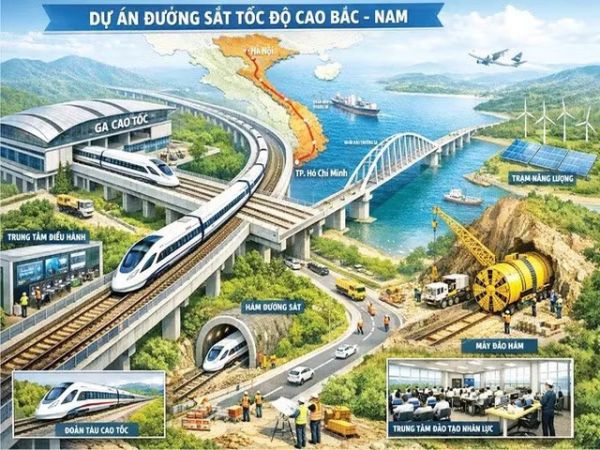
Investment Preparation:
During the fifth meeting of the Steering Committee for significant national railway projects in early January, Prime Minister Pham Minh Chinh emphasized the importance of moving decisively from institutional construction to execution.
The Government has directed the Ministry of Construction to complete the selection of an international consultant in January and to appoint a consultant as soon as possible to compile the feasibility study for submission to the Prime Minister by mid-January.
Deputy Minister of Construction Bui Xuan Dung stated that officials are evaluating local and international norms, worldwide experience, and Vietnam's practical situations to determine the best technological solutions.
Minister of Construction Tran Hong Minh has directed relevant units to immediately submit studies on special processes, investment models, and investor selection criteria, with the goal of starting construction by the end of 2026. Minh has also appointed the Thang Long Project Management Board as project owner, replacing the Railway Project Management Board and tasked it with overseeing project quality, progress, and costs.
Component project 1 of the Lao Cai-Hanoi-Hai Phong railway line, which covers connecting lines to stations, has already begun construction. Component project 2, which focuses on the core railway infrastructure, is accelerating feasibility study preparations, with approval scheduled for June. According to the plan, an agreement on rail connection and construction of a cross-border railway bridge with China will be signed in March, an assessment will be completed in July, and building will begin by the end of the year.
Local governments are immediately identifying boundary markers, obtaining cadastral data, and developing compensation and site-clearing plans. The Ministry of Finance has been responsible for balancing and providing adequate cash, including loan possibilities, to avoid financing shortages impeding growth.
Human resource preparation is also given priority. A project to teach and develop Vietnam's railway personnel until 2035, with a vision to 2045, is now underway, with hundreds of engineers and specialists receiving training at home and abroad.
Maybe You Like This