
NGONG PING 360 CABLE CAR
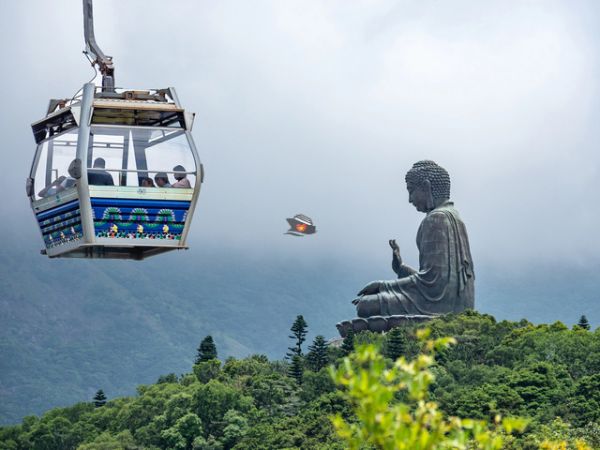
Ngong Ping 360 Cable Car. Ngong Ping 360 is a picturesque 5.7-kilometer, 25-minute bi-cable gondola lift in Hong Kong that connects Tung Chung to Ngong Ping town and offers panoramic views of Lantau Island, the Big Buddha, and the airport. It provides both normal and glass-bottom "Crystal" staterooms, which provide a unique aerial view of the sea and mountains.
Ngong Ping 360 Cable Car:
The Ngong Ping plateau, at the foot of Lantau Island's Lantau Peak, is an ideal Hong Kong location for a spiritual stroll to explore Buddhist culture and natural beauty. The 115-year-old Po Lin Monastery has temples and halls with designs influenced by Song (960-1279), Ming (1368-1644), and Qing (1644-1911) dynasty architecture, as well as the famed enormous Big Buddha bronze statue. Enjoy a spectacular cable car trip with views of Lantau Island and Tung Chung Bay.
The annual Tai O Dragon Boat Water Parade encapsulates the village's traditions and was included in the third national list of Intangible Cultural Heritage in 2011. On the day of the Dragon Boat Festival, members of Tai O's three fishermen's associations march along the canals, displaying god sculptures and congratulating their fellow villagers.
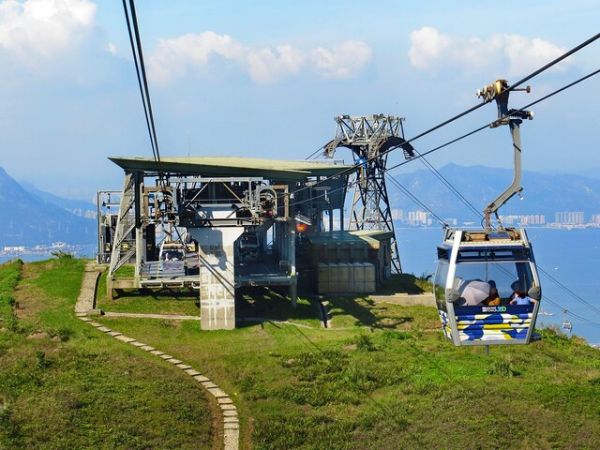
The hilltop Ngong Ping 360 Cable Car Terminal is a good starting point for any visit to Ngong Ping. The 25-minute, 5.7-kilometer cable-car trip from Tung Chung provides passengers with spectacular, unrestricted views of Lantau North Country Park's undulating topography, the coastal areas of Tung Chung Bay, and aircraft taking off and landing at Hong Kong International Airport.
Standar Cabin: The Ngong Ping 360 cable car journey is regarded as one of the world's most thrilling cable car experiences. Get on our basic cabin for a great start to your Hong Kong day trip. Explore Lantau's natural beauty and native wildlife to get a sense of the other side of Hong Kong.
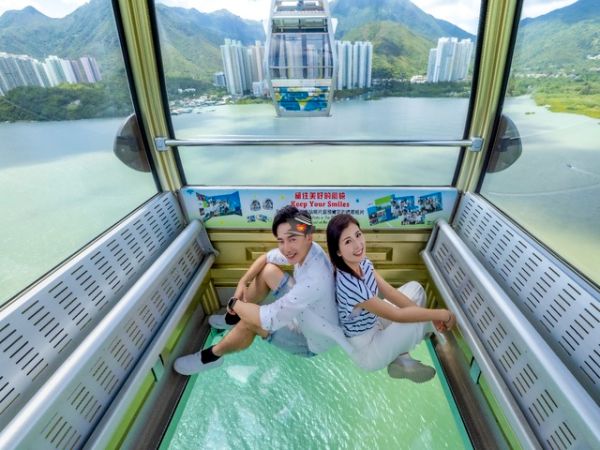
Crystal Cabin: The glass bottom provides a breathtaking view of the endless sea and sweeping grassland slopes right beneath your feet. Enjoy the unique, uncomplicated bird's-eye perspective.
Ngong Ping 360 Cable Car Building History:
Following a feasibility study, the Hong Kong government invited detailed proposals and tenders in 2000 for a 30-year franchise on a Build-Operate-Transfer basis for the global project of operating, managing, and maintaining a cable car system connecting Tung Chung and Ngong Ping on Lantau Island. The Tourism Commission stated that the project's goal was to broaden the range of attractions available to tourists in order to strengthen Hong Kong's position as the region's premier tourism destination. The goal was to find a viable proponent by the end of 2001 and begin operation of the cable car system by early 2006.
Construction of the cable car project started at the beginning of 2004. The system was originally scheduled to open on 23 January 2006, but on 17 June 2006, during the trial run with a maximum of 109 gondola cabins on the cables, a cabin arriving at Ngong Ping station had a slight collision with a late departing cabin. The entire system was immediately shut down by the safety mechanism, trapping 500 volunteers for two hours. As a result, Skyrail-ITM rescheduled the launch day to address technical issues, testing, and emergency personnel exercises.
After two months of improvements and repairs to the damage caused by Typhoon Prapiroon in August 2006, Ngong Ping 360 commenced a seven-day trial run on August 30, 2006. The project director of MTR Corp and top officials from Skyrail attended the facility's soft opening on September 18. In accordance with feng shui customs, Skyrail-ITM sold just 1,688 tickets for the inaugural day's service on September 18 at HK$88 apiece, with the numbers deemed lucky. Henry Tang officiated the attraction's grand opening on November 9, 2006.
First Operation:
System problems continued to occur on occasion after service began. Between its launch on September 18 and October 27, eight service interruptions were documented, forcing a parliamentary body to question the operator's ongoing functioning.
In April 2009, the business launched its premium Crystal Cabin service, which has glass-bottom cabins. On January 25, 2012, Ngong Ping 360 had a technical issue due to a malfunctioning pulley, leading the automated system to come to a halt. Passengers who were stuck were eventually evacuated by continuing the operation at a slower speed.
Stations:
The cable car excursion provides a 25-minute airborne alternative to the present one-hour travel along Tung Chung Road, allowing guests to glide across Tung Chung Bay and up to Lantau Island to the Ngong Ping Plateau.
The cableway begins at the Tung Chung Terminal and travels across Tung Chung Bay to Airport Island Angle Station on Chek Lap Kok, where it twists approximately 60 degrees before returning across Tung Chung Bay. It then ascends via Lantau North Country Park to another angle station near Nei Lak Shan (Nei Lak Shan Angle Station), before descending to the Ngong Ping Terminal.
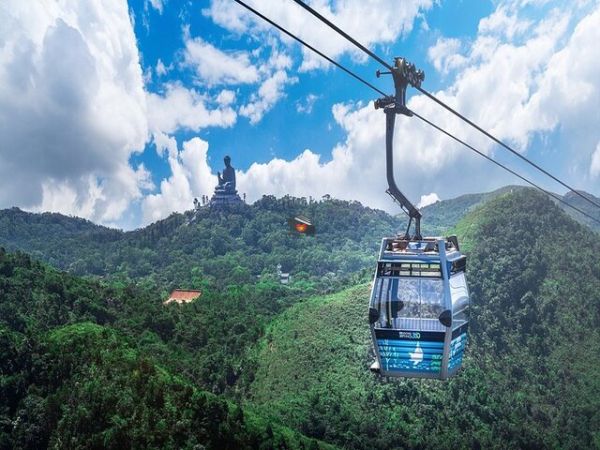
During the 25-minute voyage, passengers may enjoy panoramic views of the North Lantau Country Park, the South China Sea, Hong Kong International Airport, the Tung Chung Valley, the Ngong Ping Plateau, and the surrounding topography and rivers. As travelers approach Ngong Ping, they will witness The Big Buddha and the Po Lin Monastery.
Design:
Aedas, the project's architect, designed the line, which employs a continuous circulation twin cable aerial ropeway technology known as a bicable gondola lift. The cable car system's contractor was the Leitner Group. The 5.7-kilometer cableway between the Tung Chung and Ngong Ping Terminals reverses direction twice at two angle stations, one on Chek Lap Kok's south coast and the other west of Nei Lak Shan in the Lantau North Country Park. At each angle station, the gondola cabins are briefly removed from the cables; however, there are no passenger loading or unloading facilities.
The cableway is supported by eight towers. The cabin features a contemporary design with seating for ten and standing capacity for an additional seven. It also has elements designed to satisfy the requirements of handicapped passengers, such as the elderly and wheelchair users. The system has a capacity for 3,500 persons per hour in each direction.
The cableway and cabins are manufactured by the Leitner Group. A continuous circulation bi-cable aerial ropeway system, with the track cable acting as a rail in the sky and the haul cable pulling the cabins, enables for great distances between towers. It is the first of its kind to be installed in Hong Kong. Martin Leitner, Leitner's chief sales officer, said that the cable car system used in Hong Kong is significantly heavier and larger than that utilized in Austria. He stated that the steel columns used to support the system must be stronger, and hence more expensive.
The cable car line provides two levels of service based on distinct cabin designs: Standard Cabins and Crystal Cabins. The Crystal Cabins are distinguished by their glass bottoms and are priced at a premium. Both sets of cabins travel on the same cable, and passengers are separated by queue systems at both terminals.
HIGHLIGHTS SPOT:
1/ Book This Trip To Explore Ngong Ping 360 Cable Car:
1. Ngong Ping Village:
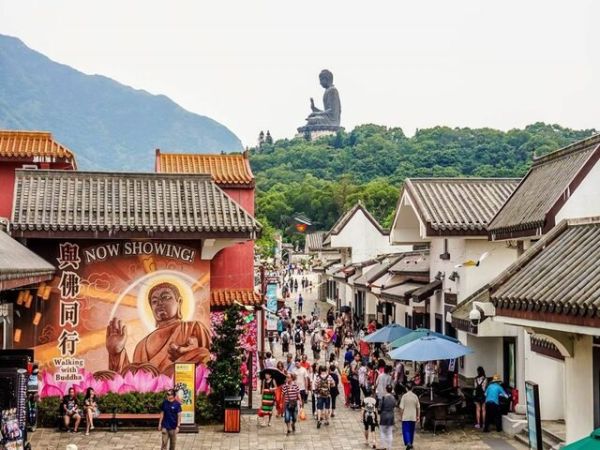
This culturally themed community was constructed using traditional Chinese architectural characteristics that compliment Ngong Ping's natural surroundings. The two-story complex houses over 20 stores and restaurants, where tourists may pick from a variety of dining options and find an intriguing selection of souvenirs such as jewelry and Chinese arts and crafts. The village has several good spots for taking Instagram-worthy photos, such as the rows of eight blessing drums, which display the Chinese characters for positive ideas like happiness and success, and the 'Tree of Awakening' or Bodhi tree, which has numerous wishing placards hanging from its branches.
It also has two immersive multimedia attractions: the Motion 360 Theatre and the Walking with Buddha Experience. To enhance tourists' travel experiences in Lantau, the newly rebuilt Ngong Ping Nature Centre offers interactive displays, guided tours, and map and trekking pole rentals.
2. Po Lin Monastery:
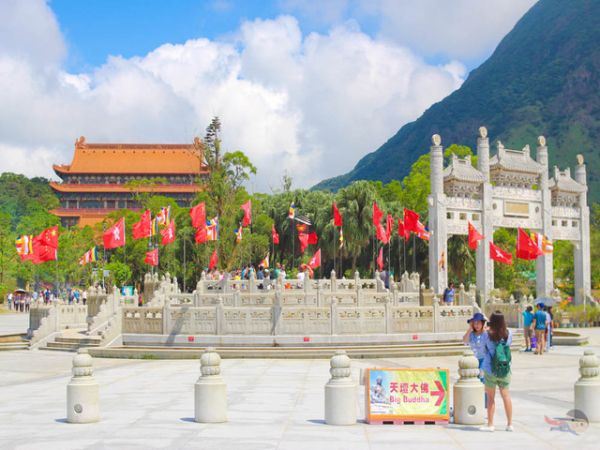
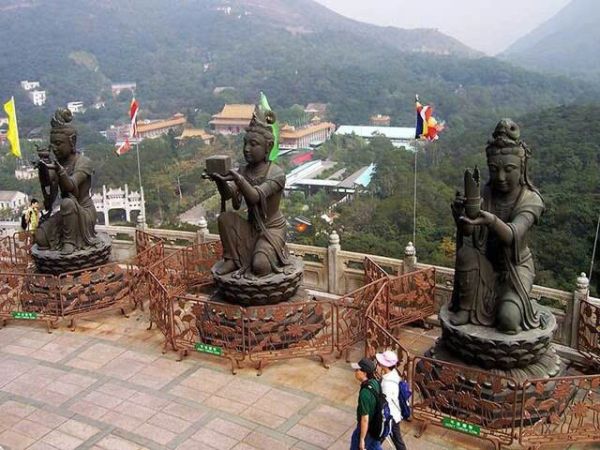
Three monks from the Mainland's Ch'an (Zen) School in Jiangsu province established Po Lin Monastery in 1906, teaching Buddhist practices in Ngong Ping from a modest stone hut. Its symmetrically designed complex of structures, which includes the Main Shrine Hall of Buddha and the Grand Hall of Ten Thousand Buddhas, as well as bell and drum towers, incorporates architectural styles from the Song, Ming, and Qing dynasties. Many guests stop for lunch in the monastery's dining hall, where they may sample a variety of vegetarian foods and drink a pot of Chinese tea.
3. Tian Tan Buddha Statue:
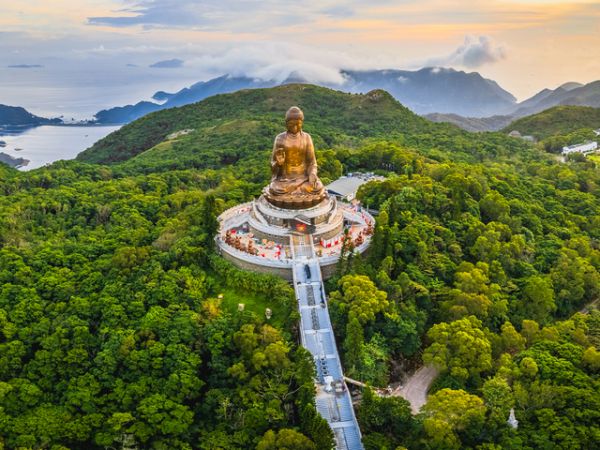
The Big Buddha statue, also known as Tian Tan Buddha, is the world's biggest seated outdoor Buddha and is located on top of the 479-meter-high Muk Yue Shan, next to the monastery's main area. The 34-metre-high statue, made of 202 bronze parts weighing a total of 250 tons, represents Hong Kong's stability, China's prosperity, and global peace. The project's construction began in 1981 and was formally inaugurated in December 1993. Energetic tourists may climb the 256 steps to the hall inside its base and take in the breathtaking vista as they look back down at the monastery.
4. Tung Chung Bay:
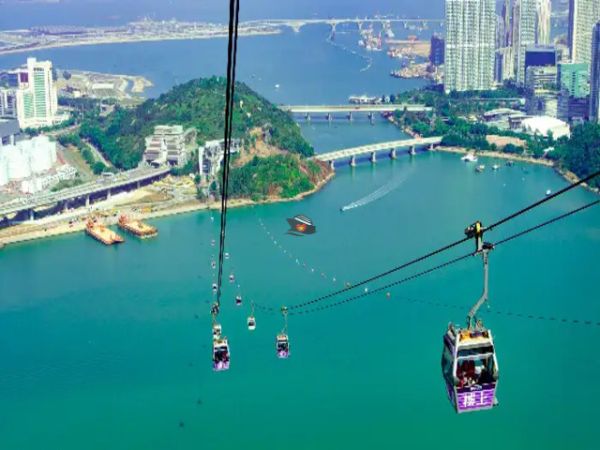
Looking down from your cable car, you'll see Tung Chung Bay, an incredible natural home for wildlife and a favorite fishing and clam digging spot. The harbor also includes the Shan Tau wetlands, which are designated as a Site of Special Scientific Interest. The unusual mix of marsh and seagrass is rarely seen in Hong Kong.
5. Hong Kong Zhuhai Macau Bridge:
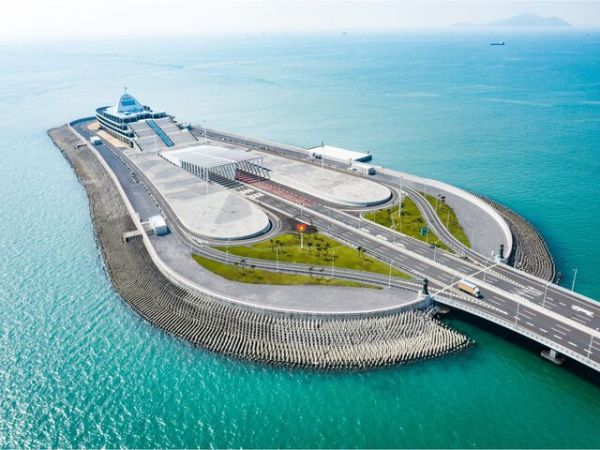
The far perspective of the 50-kilometer-long Hong Kong-Zhuhai-Macau Bridge is complemented by the breathtaking backdrop of the huge ocean and beautiful sky. The bridge, which connects Hong Kong's Lantau Island, the Macau Peninsula, and Zhuhai in Guangdong province, is made out of artificial islands and an underwater tunnel. Meanwhile, it is the world's longest undersea tunnel with six lanes.
6. Lantau North Country Park:
The lush foliage in front of you is the Lantau North Country Park, Hong Kong's country park. Established in 1978, the park's 22 square kilometers encompass a number of famous hiking destinations, including Sunset Peak, Yi Tung Shan, Lin Fa Shan, the northern slope of Lantau Peak, Nei Lak Shan, and north of Ngong Ping. On weekends, the region is busy with hikers.
7. Nei Lak Shan:
Nei Lak Shan is Hong Kong's sixth-highest peak. At 751 metres above sea level, you can see the whole South China Sea and the Hong Kong-Zhuhai-Macau Bridge in the distance. When the skies are clear, you can see Macau from here.
Buddhist Vegetarian Cuisine:
Po Lin Monastery, located near the famed Massive Buddha, provides a genuine Buddhist dining experience that includes traditional vegetarian food produced in accordance with centuries-old monastery traditions. These vegetarian and alcohol-free meals highlight Buddhist cooking's creativity and nutritional knowledge by transforming simple vegetables and grains into fulfilling, tasty dinners that nourish both body and soul.
The monastery's adherence to vegetarian ideals reflects Buddhist teachings on compassion and mindfulness, while the cooking methods showcase the exquisite culinary traditions that have evolved within monastic communities over many centuries.
Sustainable Culinary Tourism:
Choose locally-owned restaurants, buy traditional items directly from family-run enterprises, and participate in cultural events that assist the local community economically. Your culinary journey directly helps to preserve these historic food crafts and support the families who have practiced them for centuries.
Hotline/ WhatsApp: +847-6666-0606
Email: info@friendlytravel.vn

Maybe You Like This